About sound therapy
What is sound therapy?
Sound therapy is a healing modality that utilizes frequencies and vibrations to connect with one’s biofield and nervous system to support deep healing. It is focused on the way that vibration and sound impacts us on a physiological and psychological level, and has ancient roots that complement very well with meditation practices.
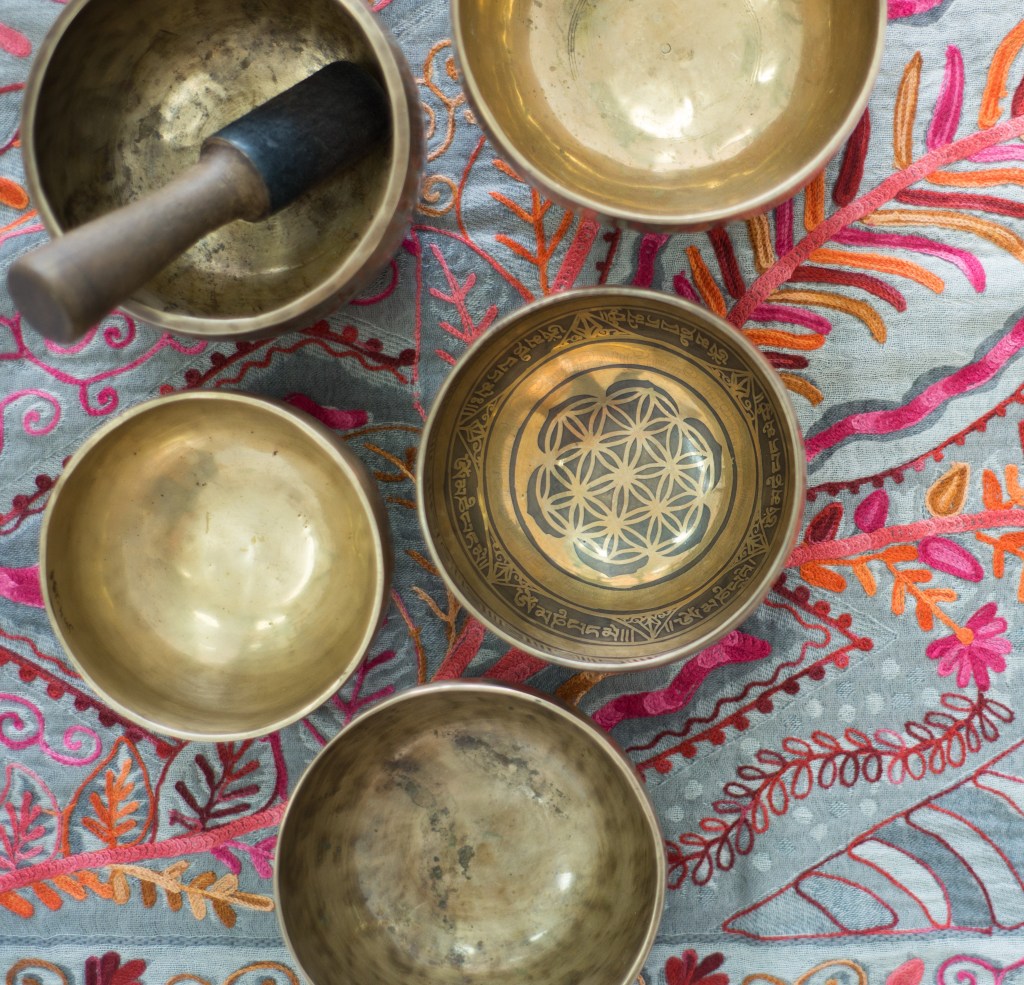
Vibrational therapy
Vibrational therapy is a larger umbrella term that encompasses various modalities that impact the biofield via frequencies and vibrations, including:
- Sound therapy
- Reiki
- Holographic energy healing
- Meditation
- Breathwork
Integrative practice
As the practices across these modalities naturally intersect, Dorothy offers an integrative practice that merges them, connecting the use of breathwork and visualization techniques, the use of mantra, intersection of the chakra/meridian/organ systems, the use of vocal toning, and connection to your biofield/aura.
How does it work?
Sounds and vibrations elicit emotional, physical, psychological, and spiritual responses in us.
When you hear a song, you feel something; this could be emotional, it could be in your body. From a music theory perspective, songs written in major keys tend to sound “happier,” whereas minor keys tend to sound “sad.”
Sound connects us to memories, thoughts, and emotions; maybe it’s the song you danced to at prom, the record you played after supper as a kid, or the radio show you listened to on the drive home after a breakup.
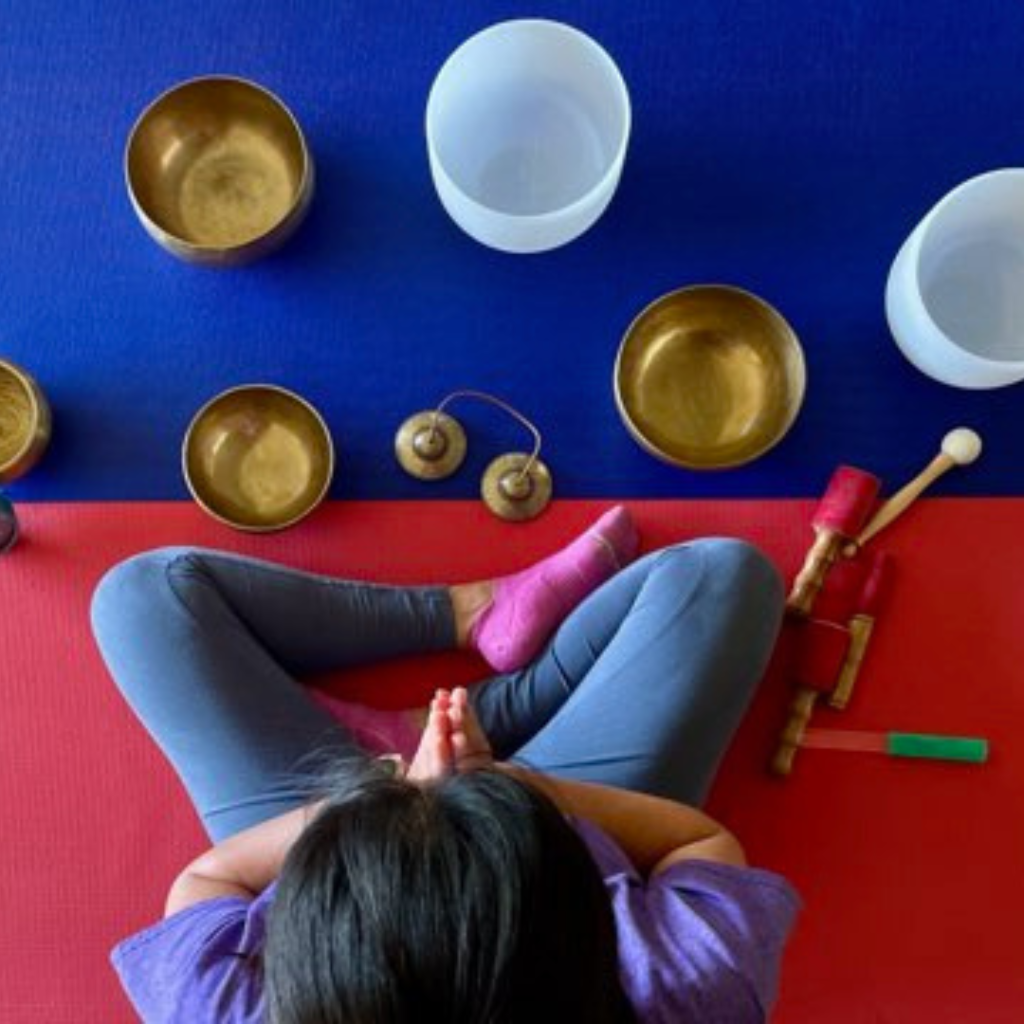
Our bodies and biofields carry memories, experiences, traumas, emotions, and thoughts. In the practice of sound and vibrational therapy, tools such as singing bowls, drums, tuning forks, gongs, chimes, vocal toning, and mantras may be used to support stress and trauma release, to stimulate the parasympathetic nervous system and the vagus nerve, and bring grounding.
Sound therapy focuses on the use of frequencies (their sounds and vibrations) to impact nervous system balance and regulation, stress reduction, and the releasing and discharging of trauma. The practice that Dorothy brings is rooted in the union of western neuroscience and Traditional Chinese Medicine (which includes Chinese Element Theory and Qigong), to access the energetics of organ systems directly via meridians and the use of vibration. The intention is to bring a participant into various brainwave states to support nervous system balancing (including stimulating the vagus nerve) to enable rest and healing. This can be done by creating specific frequencies and vibrations, such as through the creation of binaural beats using tuning forks, for example.
How can sound and vibrational therapy help?
Sound and vibrational therapy is a noninvasive modality that can access our bodies, our organ systems, our biofields, stored memories, trauma, and emotions, to support releasing what no longer serves us, the reduction of stress, feelings of clarity and peace, and a sense of grounding.

It is an accessible modality, as it does not require the participant to have a certain amount of mobility, and can be accessed virtually from home for those that may not be well enough to travel.
Research has shown that sound and vibrational therapy can help with:
- Healing muscle and bone tissues
- Stress reduction
- Pain relief
- Nervous system balancing
- Discharging and release of trauma
- Reduced anxiety and tension
- Deep relaxation
- And more
Reference: 2019, The Healing Power of Sound as Meditation
What it cannot do
Sound and vibrational therapy is not a substitute for medical care; it is a healing modality that compliments one’s overall wellness. It is recommended that clients continue to see their regular health care providers (ie: medical doctor, physiotherapist, psychotherapist, acupuncturist, chiropractor, osteopath, psychologist, etc.) while adding in sound and vibrational therapy as part of their overall health and wellness.
 Nourish The Yin